

What’s in an Award?
An invitation towards validation
I have been thinking about what it means to be awarded a prize, a place, a position, a ribbon, a trophy, a medal and all the other signs, symbols and objects that represent such an achievement. What do these do to us? What do they open up for us?
My first memory of winning was at junior school. I came first in the end-of-year exams aged eight, then second aged nine and third aged ten. That year, in top juniors, I won a blue ribbon for the 100-yard race, though the race I had privately against the fastest boy went un-noted, even though I won!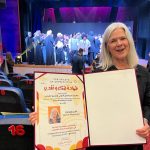
Being the first one is written into my DNA. My mum was the only one to be born to her mum. I am the eldest of six. My mum called me ‘my first born’, almost biblically. The suggestion of Jesus-like specialness was tangible. I was the first, the one she pushed forward as an achievement perhaps because through me she glimpsed a recognition she had never experienced herself. But this pushing forward has always given me discomfort.
This has proved problematic in later life. It has continued to matter to me to achieve, to win, to succeed. But I know this drive has its roots in knowing what it means to lose. I didn’t get the A Level grades expected, so I had to take the course that offered the lower certification course. I had one year to achieve consistently high grades if I was to move on to the degree course. The school seemed to have failed me, and my personal circumstances had failed me. It hit me hard. I won’t give the full background. I am not writing to seek pity. I am writing because I want to understand why getting an award is important. I think this early life experience played its part in carving out a pathway of sometimes desperate over-achievement.
Later, professionally, winning an Edinburgh Fringe First in the nineties gave a real sense of arrival, but it didn’t bring mass notoriety or a huge tour. Gaining a Best Actress award at a festival of experimental theatre in Russia did not garner invitations beyond the UK. Awards can feel like arrivals, but they do not necessarily open the next door.

Later, working alongside professionals in heritage, I began to understand the awards system in another guise. Recognition often comes to the people who actually put in for the awards. You have to do the picking. You pick the award, you make the application, sometimes you pay, and underneath it all you are picking yourself: choosing yourself as someone who deserves a chance to win. That’s if you have the time. If you are small fry, you probably don’t. This makes me question the fairness of the playing field and the value of the award. What about the people who never got to pick themselves?
I have recently won awards for my literary works Pink Granite and Redhair and Daffodil Friend. A marketing expert evaluated my small catalogue and detected the niche nature of my writing. This made me think back over my earlier work as a theatre maker, which was also niche. Niche then meant you could get spotted, remarked upon, even written about and in some ways I was, then.
But niche now means you don’t fit. The template has to be legible to the masses. Once upon a time the template didn’t matter. To gain traction these days you need social proof. Entering awards may pave the way towards slow-burn recognition for the work, or so the marketeer who replaced my mum said.
This brings me back to the question of why awards matter when what I want recognised is the work. With sport, like me running against the fastest boy, it was about me and that boy. With creative outputs, shall we call them, the work is what counts. I am learning that, in order to sit comfortably with self-selection and self-entry, I also have to be happy with showing up, showing my face, being there. That was ok when I could hide within a play, as a character or multiple characters in my case. But when you are the author of the work, showing up means being there yourself.
 I have recently been selected for an author chat for BookFest, having won a bronze award for Pink Granite. I am chuffed to have been selected from my self-selection. I am going to show up to chat, but I am going to sing from my book as well. I will be pushing myself forward with great trepidation and wondering how it will go down. It will be the first time I have shown up professionally online as myself.
When I think back to the Edinburgh Festival in the nineties and the Volgograd Festival, also in the nineties and then the Museums and Heritage Awards show in the early 2000s, I was showing up with a team. In this age of freelancing the team dissipates, making the team members non-contactable. In the small-scale touring networks of the last century, the team went along with you and enjoyed the accolades. This is yet another pleasure our modern world has allowed to disappear.